
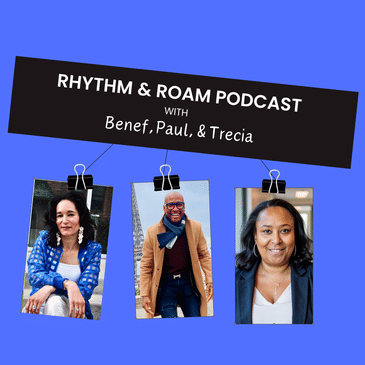



Benef, Paul, and Trecia discuss traveling back to the homeland of their parents and the potential awkwardness of not fitting in or speaking the language. Paul interviews Magd, a Danish man of Palestinian heritage. Tim shares his story of visiting Korea for the first time.
[00:00:00] Hello everyone, welcome back to another episode of Rhythm Amit Roam. I am one of
[00:00:14] your hosts, Benef and I also have my friends Paul and Trecia. And we like to talk about encounters
[00:00:22] while traveling. So those cultural encounters, those misconceptions, similarities, differences
[00:00:28] or those culture clashes that we have, were things just to be a little bit crazy to us because
[00:00:34] we're foreign, we're American. Yeah, we're so today we're talking about people that, for example,
[00:00:44] my style, if I'm half afghan, half american and what it's like in an American, correct?
[00:00:51] Black, yes, sure. Just saying the more specific. Okay, so this topic is interesting
[00:00:59] because I'm half afghan, but I've never been to Afghanistan. So what would it be like for me
[00:01:05] to travel back? Not knowing the language, not fully understanding all the cultural nuances?
[00:01:13] Yeah, like that's very, very interesting. Like it didn't even get to travel
[00:01:16] to Afghanistan in the military, which would have been definitely fascinating. Well, so I know.
[00:01:23] That wouldn't be an interesting. No, I wouldn't have then. I mean, I would have felt safe,
[00:01:28] because it's not a safe country to travel to, but well, I'm not being American. I don't know.
[00:01:34] So that's my point. That was our joy. That was our joy. That was our joy. Yeah, yeah.
[00:01:38] No, but I mean like because of the heat of why we were there, I don't think it would have been
[00:01:44] the experience that you probably would have wanted. But still, but so the fact that I don't
[00:01:50] understand the language like that's a huge dead giveaway, right? That I'm not, right? 100% afghan.
[00:01:57] I don't understand all the cultural things and I'm female. So there's definitely
[00:02:02] difference with the way they treat women over there, which I would probably not be down with.
[00:02:06] So I probably would have felt comfortable having my weapons with me, but I might have
[00:02:11] still had to have worn the head scarf. I think some women did when they were,
[00:02:14] had to go out and about. And then, so what I had been, like say I was traveling just with my family,
[00:02:22] what I've been discriminated against, I don't know. And so that's what we're talking about
[00:02:30] people that travel back. So we have, we have some, you know, we've used Tim a lot, but we do have
[00:02:36] an interview or I've clipped with Tim because he's Korean, ethnically Korean, but, you know,
[00:02:42] group American went back to Korea. So he's got some stories to share about that. And then Paul,
[00:02:47] met a man in Denmark who, yeah. I mean, that was, that was,
[00:02:53] building and I don't want to say well, you know me because my ear is always, you know, listening
[00:02:58] to everything around me and stuff like this too as well. And it was interesting I was out in Copenhagen,
[00:03:06] Denmark just, you know, visiting and also meeting up with old friends and stuff like this and decided
[00:03:13] to just hop on a plane and go there for the weekend. And I was eating brunch and overheard,
[00:03:21] you know, this young adult, he's in his 20s I believe. And he was talking with what looked
[00:03:28] to be a friend of his or something like this and he was talking about, you know, either he wasn't
[00:03:34] angry but he was just like, like, why do I need to tell it or not, whatever, but I just heard the word,
[00:03:43] oh yeah, and I have to go back to Palestine and, you know, and I live here in Denmark.
[00:03:49] Those are the only two things that I kind of picked up on. I was DNA Z. And then I lived, I literally
[00:03:55] kind of like looked and then he looked in my way and then I just basically said, oh, you're from
[00:04:01] the Middle East, you're Palestinian and he's kind of was like taking back and from there,
[00:04:07] small talks, small talk and he mentioned that well his family lived in, is from Palestine, but
[00:04:15] he's was born in Denmark, but he has his family lives in Israel. So I have all confused now.
[00:04:25] That's what you know, you're taught and you're just like, yeah, how does that work? I thought,
[00:04:31] you know, whatever. And I just literally just was like, you know what this is kind of interesting
[00:04:36] and introduce and told him about, yeah, and told him about, I do a podcast with two hosts, co-hosts
[00:04:43] and would love to see it, you'd be interested in, you know, sharing your story with me on your
[00:04:49] travel back and all this other good stuff. And being that you live in Copenhagen Denmark
[00:04:56] and was born in Copenhagen Denmark, your experience is because it has to be fascinating of an experience.
[00:05:04] Hello, I'm Mac, my name is Mac. I'm 21 years old. I'm Palestinian living at a
[00:05:12] born and Denmark. I'm curious to find out how was it growing for your from Denmark,
[00:05:19] but you're Palestinian, you're immersing yourself into the Danish culture and also being, you know,
[00:05:26] Palestinian, what was that like? Was there did you find it easy to immerse yourself there?
[00:05:34] Or what was it like with a cultural? I have like personally I've never had a problem to immerse
[00:05:42] myself, let's say in just different situations or especially here in Denmark, I haven't,
[00:05:51] you know, had that difficult experience, but that's also because, you know, I'm born and raised here in Denmark.
[00:05:59] So for me, like Danish culture came naturally and also the Palestinian culture came to me natural
[00:06:06] as well because we were like practicing, you know, these, you know, let's say on the
[00:06:13] religion side we were practicing these, you know, religious things at the same time. I was learning
[00:06:19] a more about my culture and I have traveled back to like Israel, but as you know, my family
[00:06:29] who have like, you keep like all the way back from where the 1948, where my roots is from,
[00:06:38] like I have traveled and you know, experience like, you know, how is it to be a foraging
[00:06:46] and your own, you know, country or where your roots are from. Did you, did you find it
[00:06:52] any challenges or was it easy or to be honest with the culture of yours and the Danish culture together?
[00:07:01] To be honest when I think about it, I've had a hard time, you know, fitting in when I have been back
[00:07:09] to visit family down in Israel. Okay. Yeah. I find it actually more difficult there because people
[00:07:17] or families ask me like, oh, what is best Denmark or how's that? And I'm just like, oh, they're
[00:07:24] both good and then, you know, it was this ongoing discussion but here in Denmark, it wouldn't
[00:07:31] like, I would barely meet anyone who, you know, would ask me this, like, especially because they don't
[00:07:38] know where I'm from and it's not like, it's not at all. Oh, very from you don't look like this,
[00:07:44] you know, it's like me talking to another person. Okay. I'm not, you know, getting, you know,
[00:07:50] judge as being Arab, our Muslim or this and that. That's not good. You said that you're a family
[00:07:56] that lived in Israel year from Palestine and that's interesting because I know the media may get
[00:08:02] seem like, you know, this big craziness and no way you can, you know, immerse yourself into culture
[00:08:10] and get along. It's just tell me how that was like, and is that something that was easy, you know,
[00:08:17] living, you know, family members living in Israel? That's the thing like we automatically go back to
[00:08:25] why social media is both a good and like, a bad, like, a bad, like, of course you have good
[00:08:35] side and bad side, the bad side of social media in this context is like, you know, on social
[00:08:41] media you see, oh, it's the Palestinians against the Jews. And okay, yeah, someone have that mindset
[00:08:50] and even, you know, I've met Arab people or just Muslim people who have also had that mindset
[00:08:58] living here in Denmark, you know, watching the media and also like, haven't like, experience
[00:09:05] like the Jews point of view, like, but just me, like even for my side I see that's even
[00:09:13] Arabic people have this, you know, first out of old Jews are this bad because they did this and that
[00:09:20] was it, was it, was it? Did you find it a problem culturally? Culturally I haven't found a problem.
[00:09:27] You guys remember to immerse each other. Yeah, yeah, my family, like we've all like immerse with
[00:09:32] others, not like, oh, I'm this year that like my family back in Halstein, like they have Jewish
[00:09:40] friends, best friend, you know, they get so good along and, you know, work together and even my own
[00:09:47] uncle, like he was married to a like Jewish woman and like religion when it came to religion,
[00:09:55] it was a problem. But at the end, you know, the family, you know, they accepted and it wasn't like
[00:10:02] then oh now it's a problem we have to, you know, live after her or if she has to live after him,
[00:10:09] it was just, you know, natural we got along and like just in general I've seen my mom who also
[00:10:16] speaks Hebrew because, and I've seen how she got along also you know with other Jewish people like
[00:10:23] if it's in a store, if it's in a restaurant and if somebody's the person with the
[00:10:29] niche of this culture. Exactly and my mom wears the hijab so you know, you automatically see
[00:10:35] where she is from but that hadn't made a difference and that's where, you know, again social media
[00:10:42] like gives you the wrong perspective, like that oh it's this against them no. It's like we have to
[00:10:50] build our own point of view, we have to experience things ourselves and that's like how like
[00:10:59] that's how I have like gotten my or what you say that's how I have,
[00:11:05] you know, make sure that people understand that people can coexist. Yeah that's how you
[00:11:13] created my, you know, you know, you know, you know, you know, you know, you know, you know,
[00:11:19] because what they see on TV or social media exactly and but I still, I still had a problem
[00:11:26] and this mindset we can immerse with the Jewish people even though I had this ongoing married to
[00:11:32] this Jewish woman because again I see all this and I'm just like what the fuck, why are they
[00:11:38] treating us like that from our past but at the end, like just this last year I have myself
[00:11:44] like researched and done this and that because I have heard things from what I was little
[00:11:50] and seen some things but you know, I have researched it myself to see is it true and what can I learn
[00:11:58] and that's why I know personally I don't want to make a fact or just something before,
[00:12:06] you know, I see it an experience in my life. So what I found interesting is that he didn't
[00:12:12] experience any discrimination, but growing up in Denmark, it's almost it's amazing and it's
[00:12:20] really shocking. Yeah, I was a little bit, I mean I don't, perhaps I don't know that much about
[00:12:27] how the Daines react to immigrants. Well I do so I can give a little bit of it because I
[00:12:33] gave many, many times and in case whoever traveled to first of all Denmark is a lovely country
[00:12:41] I love Copenhagen and I've been there before there was an influx of immigrants
[00:12:50] early 2000s and stuff like this so it was very white. I mean I'm just not going to
[00:12:56] sugarcoat it and then I think I don't remember where it just started but it started at some
[00:13:02] point where there was an influx of immigrants moving into the Scandinavian countries and it's,
[00:13:08] I would say it was recent as much as 10 years or less. This this influx happening. When that happened
[00:13:15] there started to be a little bit more unease maybe and protests maybe here and there and then
[00:13:23] there have been issues where I've heard when I used to travel for work where people would tell me
[00:13:31] stories of oh yes they're coming in and they didn't use they just used the word they so it was
[00:13:38] interesting and fascinating to hear this and the way how they were speaking kind of things so there was
[00:13:43] a just reclurification they meaning they mean in general or they mean immigrants is it in a
[00:13:52] umbrella of you know umbrella? No there were specifically talking about Middle Eastern because that was
[00:13:56] that was what you Middle Eastern Middle Eastern and so I wonder if like if you had interviewed
[00:14:03] his parents if they would have experienced something different since he was born they must obviously
[00:14:08] grew speaking Danish and grew up with a culture going to Danish school and he didn't know anything
[00:14:13] else more and I mean different and you heard him very confidently in his interviews that he never
[00:14:21] experienced him as and I would definitely suspect you know that there would be a difference because
[00:14:27] probably and you probably maybe in relate to this been from the Middle East as well is that you know
[00:14:35] the parents probably wishes that he was a little bit more Palestinian acting maybe versus Danish
[00:14:45] acting because I think this was more of I got this kind of off the cuff not on the interview part where
[00:14:55] there are things that his family wished he would be more like meaning of Mary and to a
[00:15:04] Palestinian culture culturally yes more culturally like you know the Palestinian culture travel more
[00:15:14] Palestine and Israel for that matter he does get some of the culture because I believe he
[00:15:20] practices you know some of the religion right he did but yeah like traveling back to Palestine he's
[00:15:28] or Israel where they live and that's that blue one like he had a hard time fitting in
[00:15:35] because he's he's Danish I mean it would be that would be the same like I'm American I
[00:15:44] identify as being American not African if I'm trying to have canistern it's going to be mighty
[00:15:49] strange for me to adopt and rule there without even making the language I he at least
[00:15:56] I believe speaks the language he speaks Arabic he speaks Arabic but yeah I think yeah and I think
[00:16:05] what makes it well least mind blowing for me is because like I said earlier the family lives in Israel
[00:16:15] well so what I find the advantage that I find that he has is that he speaks Arabic
[00:16:23] so he's got that at least without the language it's really really hard to have a connection
[00:16:29] and I'm taking Farcee right now for the current time in my life trying to learn but there's
[00:16:35] so many people that are trying to connect with their roots and by by the language so they
[00:16:44] they may be speak Farcee with their parents but it's like bad Farcee you know like improper
[00:16:50] grammar or they don't know how to read right because there are it's kind of difficult to find
[00:16:56] in American places to learn how to read and write yeah it's so they you know but that's like he
[00:17:02] has that already um I'm in fact like your mom is from Belize but they speak English there so that
[00:17:11] definitely made it easier to have a connection and yeah definitely was easier I mean it's very
[00:17:17] similar to you know the Jamaican Potswell which I know Paul you can identify with but um which you
[00:17:22] know any cre- and it's called Creole which is basically an origin every place has a Creole
[00:17:29] broken English kind of thing yeah it's a broken English but Creole basically is and everyone has
[00:17:34] a Creole really from their origin which is just an origin of that language so so yeah and to see
[00:17:43] a written it looks like a completely different language honestly but it's funny actually when we
[00:17:50] definitely at least possible definitely a different writing and it's funny yes it's a little
[00:17:58] it's a little different it's funny too when we when we when we actually speak it actually sounds dirty
[00:18:05] because we always make a we make a joke about that too but but no it definitely was easier for us
[00:18:13] than that in that regard but um it is something about that connection that you can have you know
[00:18:19] that you only have with you know with your family and and there is a definitely as a
[00:18:27] definitely is a definitely a connection that you have with your family or with your culture when
[00:18:31] you're able to do that and and not not having that and wanting to discover that you know and I
[00:18:40] definitely know that my family I think they felt they found it very important that I knew
[00:18:45] where I came from and I know I wanted to discover that I wanted to know what that was and
[00:18:51] I wanted to have a deeper meeting with that man so it's so really important to me yeah
[00:18:56] yeah what was that like for you traveling back to the motherland well it I mean for me it was
[00:19:04] it was well you know just from my origin story as you can see it with it really kind of form
[00:19:11] formed to me really um from early on it it kind of um I don't know I kind of really
[00:19:22] kind of gave me my basis really kind of home what home what was you know kind of made me
[00:19:28] and formulated me to who I you know I am it kind of gave me those basic principles right
[00:19:33] and understand it and that's what I felt like he was trying to you know really what he was trying
[00:19:38] to portray for him when he went back home so when he that's why when he went back
[00:19:44] he didn't feel accepted because there was that feeling for Paul it what did it feel like
[00:19:51] hmm it was it and I can relate to his side in saying it to it because there is and
[00:20:01] I probably get you know some some people agreeing with me from my Jamaican roots
[00:20:08] that you know obviously traveling number one it's very like Jamaicans are very very powerful
[00:20:16] like strong minded you know you know you know you know you know the flag and Jamaica is
[00:20:25] that little country that produces lots of great athletes and and food and all this other stuff
[00:20:31] but I know when I travel there because there sometimes there is you feel like I where I felt
[00:20:37] like I needed to get accepted by my family that's still living there because a lot of times
[00:20:45] obviously I was born in America all my family is Jamaican I was born in America so I am Jamaican
[00:20:55] ish you know in Jamaican like they would say but and I talk potwood and I can do all that other
[00:21:01] good stuff but I'm just not all the way because of the fact that you know wasn't really born there
[00:21:09] so I had to do overtime and overdrive to like be like look dammit my damn parents are from here
[00:21:17] and everybody else is from here so you know I'm not a young team you know I am you know everything
[00:21:25] in one so I have to I have to work overtime yeah and being able for them to like I felt
[00:21:34] like I needed to get acceptance yeah like you have to work harder to get accepted to feel
[00:21:39] absolutely good on it yes and that's it was that was interesting to me
[00:21:46] that I was relating to that and you know I loved it trust me you know there's nothing like
[00:21:53] you know a whole bunch of your family members and friends and everything like that and you know
[00:21:59] food is the celebration of life for us and you know shit chatting and the experiences so
[00:22:09] I just thought and to this day I still feel like I need to feel like hey look I am fucking Jamaican
[00:22:20] and I think that's what you experience is the same thing that the Tim talks about that
[00:22:25] sensible longing and like trying to find it because he you know he talks about growing up in white
[00:22:34] Indiana but then you know trying to go back to Korea or even to the west coast where there's a bunch
[00:22:40] of you know Asian population there yeah good for Indiana and so Indiana is very
[00:22:47] and I mean I'm an adoptee so my family is the driminant I was so that's the only world that I
[00:22:54] knew is very isolating no one plays that being the only Asian kid was not put on miles yeah
[00:23:02] you know and I know there's no Asian community because like some some parts of the United States
[00:23:06] out of the United States there's some not right you know so did you ever travel to any other
[00:23:13] parts of the United States for their worries and please actually what when I joined the Navy when I
[00:23:18] listed the Navy in the 17th year first place in what was San Diego okay and my get hot
[00:23:24] California in general especially Southern California it is Asian but that like a different experience
[00:23:30] you know I'm not alone that's other Asian Americans here I'm glad you asked that because it is
[00:23:35] probably not what you would expect um it is the one time in my life when I thought to myself
[00:23:41] I should feel like I belong to the one time in my life finally when I don't feel weird or out of
[00:23:46] place and I'll be honest because I spent my whole life in such a little I don't think I've never been
[00:23:52] more uncomfortable now when I was surrounded by all these Asian people I felt like I didn't belong
[00:23:57] with them either because I didn't speak fluently Korean or Chinese or you never any other Asian language
[00:24:05] and then the the honest Asian Americans are they can actually be sometimes most races people
[00:24:12] that I've ever had to deal with really only if you want to they call us people like me
[00:24:18] Korean is not using particular or anyone else who just grew up with a that I thought of like family
[00:24:23] they call us pianos
[00:24:26] right at the inside yelling outside or a week as you know they're not heard that
[00:24:30] making one okay but that was in the United States that was here yeah that was in California now are these
[00:24:36] like people that just like immigrants or they people that were born and they're almost all
[00:24:41] first generation okay so that their parents were direct immigrants from somewhere and they're the
[00:24:46] first generation so they speak fluently English they made a big list but they also spoke
[00:24:51] they grew up but you're raised in a Korean household that's what being a different
[00:24:56] and then when you were stationed in Korea you had like a similar that was even more than
[00:25:02] because then the Koreans they were just if you thought of us to what I was because I you
[00:25:07] hear me speak as terrible Korean and they're like are you Chinese? and like no you Japanese?
[00:25:16] no like where are you from and I'm like the US and America and they're like what Korean
[00:25:23] right like you know how do you sound like yes I'm Korean but they're like why do you talk like that
[00:25:29] and I stopped doing it eventually but like it felt like every time I cut my tax
[00:25:35] I had to explain that like a nice story of like you need a recording you know you're
[00:25:42] you be a mean in the dollar she's I am I'm a I'm a yeah some Korean but I'm a doubt these so I
[00:25:48] don't I'm sorry my Koreans not so good but there's the Barnes community in Korean
[00:25:53] the doubt these yeah now that yeah yeah okay no because that you know it started with a Korean
[00:25:57] more which ended in 1953 so the first wave that we those guys now are you know in their 60s
[00:26:04] so yeah so what I was you know my thought just keep going back and I feel like I'm tripping
[00:26:13] over my words because the the theme that just keeps coming back to me is you know when I was trying
[00:26:19] to explain myself between our two interviews is just you know mag and and and and Tim is every time
[00:26:28] I know that I go back to believes and and every time that I think back you know it's trying to
[00:26:35] recreate that feeling because to me believes is home you know it's it's the it's the feeling of
[00:26:43] home that's that's what I'm getting I can't bring it's words because it's a feeling home
[00:26:48] believes to me is home yeah and as like I said I mean belonging is is part of the feeling is stuff
[00:26:54] you know it's I can really 100% to that as well as to what mag had to say to as well
[00:27:02] you know but at the same time it's it's a sense like I said earlier it's a sense of me
[00:27:10] wanting to get their respect because as a as a Jamaican not born in Jamaica but your whole
[00:27:19] families from there I get the I don't want to say picked on but the you're not Jamaican enough you know
[00:27:26] for sure yeah yeah yeah yeah yeah but that's a feeling too you need to feel respect you need to
[00:27:32] feel respect you know as well right but but I should do that because I you know what I mean
[00:27:38] I don't know how to even put it in the words but it's like yes it is a feeling but it's like you
[00:27:43] have to get initiated to get someone who's Jamaican to say yep you're fully Jamaican even though I
[00:27:49] did not have I couldn't you know it was gonna be yeah yeah I mean you had different experiences
[00:27:56] and then obviously growing up in America and and believe me I talk pot to a very well and
[00:28:04] trust me you know you don't want me to lash some words out right now because
[00:28:09] what you're saying it's not enough for them is that what you're saying it's funny it is it is at
[00:28:14] time and then when we start to you know mannerisms or the way I'm talking because all of a
[00:28:21] sudden I turn it on and turn it off and then they're like what is going on here what is wrong with
[00:28:27] your voice what is this really and look look at this completely and over it really right
[00:28:32] all I mean and that's the same thing like you know Tim's Korean was not good enough for the
[00:28:38] their life yeah are you Chinese or you know but then he and he also grew up white so he was
[00:28:45] a good enough for the West Coast Asians you know the evergreen thing is like what the fuck you know
[00:28:51] like and that's the the the the part that is interesting to me like obviously I love my family
[00:29:01] and love you know the culture of where you know my family's from and everything because that's
[00:29:07] what made me and stuff like that but don't get it twisted my Jamaican can come on to win
[00:29:14] it won't for come out so when you want you know about it with me that's just an exam so yeah
[00:29:21] that's not true that I'm curious can I just ask you then the neck and you could choose to answer
[00:29:29] or not or it might be another podcast um was the reason why your parents or your mom did not
[00:29:38] teach you forcy when you were younger where it'd be easier to learn yeah so she did speak to me
[00:29:44] in pharmacy all the time you know but and I was speaking both English and forcy together so like a
[00:29:51] mix of the two languages because you know at that point maybe I was three or younger couldn't
[00:29:56] separate the two languages as kids don't and so this would have been 1978 in Madison Wisconsin
[00:30:05] okay so just get that image in your head all right it's a it's a university town so
[00:30:10] generally more diverse but I'm going to preschool and it's probably mostly white um I don't remember
[00:30:19] but I've been told that nobody could fucking understand what I was saying
[00:30:23] the only person that knew what I was saying was my mom because she spoke both
[00:30:28] so it wasn't because my dad is American right he's African American he doesn't speak
[00:30:33] farcee so they were speaking English to each other my mom and my dad so you know I didn't have
[00:30:39] that distinction to oh I speak farcee with my parents I speak English outside of the home yeah it was just
[00:30:45] both and because I didn't know it's struggling I mean I apparently no one understood what I was saying
[00:30:51] so that's like a lot of stress for a child when I'm asking for like water I don't know and
[00:30:55] all right I got to go to the bathroom and no one knows what I'm saying um so they went to a child
[00:31:01] linguist and now I don't know if this guy was white uh if by my mom and my dad are watching
[00:31:06] you need to comment was it a one because here's the advice was to stop speaking farcee now it's
[00:31:13] a 19-year-old so that sounds a lot of political and they again share better judgment you know
[00:31:21] they they just wanted me to probably not be suffering and they stopped and I never picked it up again
[00:31:29] well this has certainly been a very interesting discussion and I want to thank
[00:31:33] Magd and Tim for sharing their story so thank you also to listeners and the people watching
[00:31:42] if you liked our show please follow us comment subscribe and we hope to see you next time
[00:31:52] so