


You don't have to be single to travel solo. But you might have to get comfortable making a few decisions without everyone else's approval.
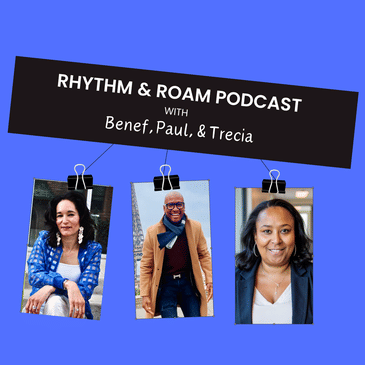
In this Jet Lag Diaries episode, Benefsheh, Paul, and Trecia discuss Paul's book, Book the Damn Ticket, and the personal experiences behind it.
Paul shares why traveling alone once felt like something people did because they had no friends. He takes us back to his first solo trip to Stockholm, from lying on the hotel bed wondering what to do next to repeatedly reading a restaurant menu because he felt awkward eating alone.
The conversation goes beyond travel. Trecia connects the same struggle to returning to school, and we discuss how easily someone else’s fear can become a limit we place on ourselves.
Expect honest stories, a little teasing, and a reminder that doing something alone doesn’t mean something is missing.
What have you put off because you didn’t want to do it alone?
Find Paul’s book and more Rhythm & Roam:
RhythmAndRoam.com
Follow the podcast for more travel stories, cultural conversations, and Jet Lag Diaries.
[00:00:00] And for me, whenever I thought of traveling on my own, I thought of single, no friends, you're a loser. And you're like, well, I'm just going to book the damn ticket. And that was like a huge energy shift, like a huge mindset shift. Damn, I just traveled on my own and now I'm scared to figure out what I want to do.
[00:00:22] The silence you're avoiding isn't out there in some foreign city. It's right here inside you in the gap between what you want and what you let yourself have. Who cares? Because we put so much weight on what people think of us. I think people need to read this book if they've got any sort of inkling of wanting to travel. Pack your bags, we're on the move. Rhythm and roam got nothing to lose. Culture clash from coast to coast. Misconceptions we chasing ghosts.
[00:00:51] We're talking about the book, Book the Damn Ticket, that Paul has written. What a glass of wine. Yes, and he's got wine to celebrate. Well, this is very exciting because I knew, like, I was always going to read your book, Paul. Well, thank you. I knew it was going to be good. No, but I was surprised by how well written it actually is. I don't know if I should take that as an insult.
[00:01:15] I mean, but just like the information, like, so that's what surprised me. I know what you meant. What you shared. Like how vulnerable you are. I just didn't know any of this stuff. I know what you meant. It just came out as a, you know, but it's okay. Oh my God, you could actually write. A communications person. A communications person can actually write when they want. No.
[00:01:41] And so I'm gonna, I told my husband he needs to read it and, um, because it's good. I mean, I was like, this is good information. Like people, people need to, um, to read this book if they are people that like to travel, but have held back on traveling because they don't have anyone to go with them. The reason why I ended up writing this book, honestly, with all jokes aside is that
[00:02:09] one, I've always, because I've, I've traveled, um, so extensively, you know, now I'm up to, uh, 60 countries. And I know that every time I used to, like, I remember like the fear I had when, you know, I was, I first decided to do something on my own because I don't know if I was ever taught to go travel on my own.
[00:02:34] Me personally. And it was always, you know, as when I was growing up, I'm from a large family, you know, I'm the last of nine kids. We did not come inside that house without all of us all at once, you know, and then growing up and then I went away for college and everything I did, it was always with someone or traveling somewhere. And then, you know, when you go in the military, what do they tell you? Get your battle buddy, go get a buddy. You need to have a battle buddy. Yeah.
[00:03:03] Yeah. I would say that travel is kind of like, that's what we see the, the commercial side of it is people traveling together, having a good time, whether it's families, couples, girls trip, it's always together. It's always, it's always together. It's good. Make it happy. You know? Yeah. And that was a stereotype that it really bothered me because at least the American mindset that I went and I,
[00:03:29] it started when I lived in Germany and I, you know, got involved into the community where I was living in Germany. And it was just so weird to hear people talking about just traveling on their own. And for me, whenever I thought of traveling on my own, I thought of single, no friends, you're a loser, you know, kind of, kind of attitude.
[00:03:54] Well, I hear you. I still have that. If I want to go any place by myself, like a movie or less a movie, but like definitely a restaurant. Yeah. Movie is the same thing with a movie. Or like, for example, I'm going to go, the Denver Film Festival is happening. And so there's films I'm going to go and see. And also like the film makers party. And I'm going to be by myself. And I have to get over feeling weird about that.
[00:04:22] Yeah. And that's, that was one of, that was one of the things that, like you hit it, everything you just said, Benef, is exactly why. And I started to write it eight months ago, seven and a half months ago, but I stopped because I was scared. And I was only scared because of everything that, you know, the naysayers and the negativity and stuff. Oh,
[00:04:48] nobody want to hear your story. Nobody wanted to do whatever. And I, I distinctly made a chapter to talk about, you know, after you travel, you know, nobody want to hear about it kind of thing, because it's true. Well, that, and it's interesting that you're mentioning that now, because that's, that's where I, that's where kind of, I pivoted. And those are kind of the things that I wanted to kind of clue in on with your thought process when you're, when writing this is that the permissions that you allow yourself, the things that you allow yourself to do. And, and the permissions,
[00:05:17] it goes both ways, the things that we're allowed to believe, and then the things that were, that we allow to push through anyway. So talk about that part of it. What, what was, what was so important that you needed to get across for others? And it's, and really it's, it's, although your book has a premise of traveling solo, I think there are some things also with just traveling, even traveling with community
[00:05:41] and allowing, um, and I guess the word, and really for me is being allowed to do the things that you want to do, even when you're in a group. Right. So what, talk about those permissions that you give yourself a little bit more. Well, yeah. So for one, I just had to, I had to do it on my own, meaning I had to make the decision on my own because trying to get someone to say, Hey, I'm gonna,
[00:06:08] you know, travel on my own kind of thing. Number one at the time, telling my mom that she was scared and nervous for some odd reason, because I'm outside of the comfort zone that she knows in the comfort zone that I know. And then at the same time, trying to talk to colleagues was like, you're crazy because colleagues were like, you're doing what you're traveling on your own. Why?
[00:06:34] Like you don't, you didn't have anybody to go with. So that's there. And then when I, when I finally end up doing what I wanted to do. And then when I finally got to the courage part of eight months ago, when I said, I'm going to do this. And I talked with you guys first saying, I think we should do, I should write something about just traveling on your own kind of thing. As I started writing it, it was almost like I was, I was writing it. And then I started boiling up papers because I was
[00:07:02] like, wait a minute, why am I writing it? As in like only people who are single can do this, or this is only for people that's single. And of course I did a little Google smoo goo and all this, all that little research and talking. And then knowing people here in Europe do it constantly. And they're married, they're single, they're everything. They're old, they're young. I mean, it's everything. And then I was like, that's what it's supposed to be about. And it, it got me
[00:07:31] thinking. And then I, and then my trip to Jamaica, when I went to see family, that also got me thinking because, you know, I wanted to do this trip really for my mom, when my mom, and I, I was hoping my mom and dad was alive to see this and so on. So a lot of that stuff weighed in and I was like, well, is this story going to be boring or is it going to be good? That was my biggest fear was how do I write
[00:07:57] it? And then I, again, I did research and I was starting to look to find out what, what people were saying on how they write. I mean, I YouTube, like how people wrote and I thought I was creative, but there are certain things that I thought I knew I didn't know. And the one thing that kept clicking that people kept saying is just right as if like how we're having a conversation right now and don't even worry about trying to be perfect. And that was what was in my
[00:08:25] head. And, you know, that's what we were taught when we're in the military, when we're in college, you know, we're taught when you're writing, you got to do it certain way. You know, when you're doing press releases, it has to be, you know, uh, all the things that are good and gory up top and then everything else below and all this other crazy stuff. So now it was like, now I want to write something that's just for myself. And that turned, I think it was when I,
[00:08:55] when, when I said, I'm just going to write as if I'm sitting down having, you know, a glass of wine or a cup of coffee telling a friend a story. And from there, that's what made it work. Well, what's, and, and I think you come back to this particular theme throughout the book, but when you want to do something and you're looking to other people for validation or permission and
[00:09:22] their fears are telling them to be like, no, don't do that. Then you're putting that control, your control of your decision into their hands. So you're giving up control. And so you, you talk about that, that you were giving away your power based, just based on someone else's fear. I mean, and so that's, you came to understand that that's what was happening. And you're like, well, I'm just going to
[00:09:48] book the damn ticket. And that was like a huge, um, energy shift, like a huge mindset shift. It just changed everything for you. Um, that one trip. And that was, that was the key. Stockholm. Yeah. Yeah. Stock, which again, as I was writing that, I was like, why it's not even sexy. Like it wouldn't have mattered the city. It was just the first place you decided to go to.
[00:10:14] I know it was not even sexy. I don't even know why I chose Stockholm. I have no idea to this day. It's not a bad place. I thought it was because the dudes were talking about it. Those two runners or whatever. Yeah. But I, but why did I think that was the thing? I don't like, yeah, just because somebody was talking about it. I don't think it mattered. It was just the first city that came because it's, it's relatively, it's, it's comfortable. Stockholm is not like, Oh God, I'm going to be out. You know,
[00:10:41] it's just a Nordic city. It sure was. And this was early 2000. You know? And so it's, yeah. And so no, it was, it's, um, when I, when I finally hit the, hit the button and after like you just mentioned, my German friends was talking about them traveling and doing whatever they want and they were traveling on their own. And they looked at me like I was crazy because I was like, you did that on your own. And they're like, um, yeah.
[00:11:11] Yeah. Like, yeah. And I hear it go to the bathroom on my own too. What's the big deal? Don't need your permission to do that. Well, I mean, but that, but that's interesting because I think that's in any decision that we make also is just the fact that we allow, we as you know, individuals allow so much power for other people and, you know, influences of other people to make decisions for us when we're fully capable of doing that. But it's this, it's, I don't know if it says, ah, society or just
[00:11:40] the way we're brought up or culturally or whatever it is, the fact that we make a decision and are, are okay with that because it's the exact same thing that I went through when I told everyone I was going back to school, they thought I was absolutely insane and wanted to impart everything on all the reasons as to why it would be a bad idea. And now that I've come through on the other side of it, how I feel in the littlest things that, that even just points back to what I've done.
[00:12:11] Is such a huge accomplishment and such a breakthrough, right? So I think one thing you definitely, uh, I think just theme throughout the whole book is the fact that when you make that decision and the, the things that happen to you, the transformations, um, that, and that's what I'm hoping we'll, we'll talk about next is those transformations and those things, those little things that you do for yourself and those choices and how they make such a big impact, um, on really how you
[00:12:39] see yourself and the fact that, oh yeah, right. I can make decisions. I can do something that, you know, that's actually great. Well, and I just want to quote this one thing, cause you say the silence you're avoid, avoiding the silence you're avoiding isn't out there in some foreign city. It's right here inside you in the gap between what you want and what you let yourself have. And I was like, holy shit balls. Okay. Let's, let's, let's switch gears a little bit. Let's talk about your chapter, um, where you talk about eating alone as an art form.
[00:13:09] Oh yeah, baby. Um, first of all, I love the way that you introduced the, um, you know, you kind of introduced the, the chapter and where you talk about once again, Stockholm, uh, being your first solo trip and going, but more importantly, the part where you talk about the fears that you had coming in, but again, pushing through, uh, and I guess I'm, I'm, I'm, what I'm getting at is that
[00:13:37] how life still continues on, um, the fact that you didn't want to look around, you don't, you know, you don't want to look up because you were afraid of what people were saying, what were they looking at you? You know, it was a race thing. It was all these things, all these things that were coming in your head until you looked up. So talk about that. Talk about that experience. Yeah. I can, I can, this is again, going back to the cultural part, right? It's not the norm
[00:14:04] to sit by yourself. At least this is what we were taught. We were, I think this is what we were taught as Americans. It's not the norm to sit and eat by yourself. Just think about when you were in high school and elementary and junior high. Did you want to? Yeah, it was horrible to sit and eat by yourself. The person, the new kid eating alone. Yeah. And we all, I say we all were in that, that space,
[00:14:30] but I was in that space. I remember when I was a new kid in a new school and now it's lunchtime and everybody has their friends and stuff. And I'm sitting there like trying to squeeze in next to people that are sitting next to me to make it seem like I'm not eating by myself. So that's the cultural part. And I, I had it so bad when I went to Stockholm and as you,
[00:14:55] you allude to in the book, like that part really, to this day, I don't know why I got so scared, but I was scared when I got it, when I landed in Stockholm, this is again, early 2000s. Stockholm is a, is a little bit more diverse now. It wasn't back then. And I remember when I got off that plane and I decided to take the train into the city and went to the, um, the hotel and, and I
[00:15:22] literally laid on the bed, just laid on the bed for a good 30 minutes, looking up at the ceiling, just saying, damn, I just traveled on my own. And now I'm scared to figure out what I want to do. I had no itinerary. I just did it. And then I just snapped out of it. I was like, the fuck? Like, okay. Yeah, I'm here. Okay. What, you know, kind of attitude in my head.
[00:15:49] And I'm like, okay. And then I, that's what made me go outside. And then there was no cell phones big back then. I didn't have a cell phone. So yeah, there were cell phones, but it was expensive, but I didn't have one. So the one thing I did was when I was in the restaurants, I thought people were looking at me and just judging me or whatever. But it comes to the fact that nobody was, because then I started seeing other people sitting there eating or drinking
[00:16:17] coffee on their own. But in my mind, I was having that fear. And I had the, um, what do you call it? The menu, man, I can't tell you how many times I read that menu to make it seem like I'm in a interaction with somebody. So it's just one of those things where once I got over that, like, I think the first day was when it was really awkward. After the first day, I just said to hell with it. I don't know any of these people. That was the first thing I said.
[00:16:45] I don't know any of these people. And for me to think, so what they're judging me. And that's the one thing I wanted people to get out of when they read my book or anything like this, is that who cares? Because we put so much weight on what people think of us. So this book you can buy on Amazon and also with books.buy. Our website, rhythmandrome.com
[00:17:12] is where you can find those links, or you could just book the damn ticket. And then of course, once you buy the book, please do leave a review. We're excited like this. I think people need to read this book if they've got any sort of inkling of wanting to travel. And even if they don't want to travel, like that's the premise of why you wrote it. But there's still so much good stuff in there about just how to let go of fear, you know, how to... And at the end, I put in some good helpful
[00:17:41] information that you can have. But I just wanted to, if you don't mind, I just wanted to make it clear that the whole entire purpose of the book is not for single people. It's for anyone. Because we all have that fear and we all need, at least once, do a trip somewhere. And it doesn't have to be far, just away from everybody. And it's just you making the decisions to do whatever it is. So I just wanted
[00:18:09] to make that clear. That is not for single people traveling by themselves, but you don't need to be single to travel by yourself. Very true. Because I hated the fact that I kept on putting that in my head when I was writing it. So I'm excited and so on. And so far, it's been, you know, really received well. And people have learned some things. So I thank you guys for giving me this platform to
[00:18:38] kind of talk about it a little bit, too, as well. And I'm really excited of what I did. And it shows that you shouldn't listen to naysayers because... Hmm. Naysayers get... You too can write a book. Yeah. Yeah. And I thank my naysayers. I gave them a special shout out. Absolutely. Haters are gonna hate. They provide lessons for sure. Haters, absolutely. They're gonna hate. Exactly. So definitely.
[00:19:06] All right. Well, we'll see you guys next time. Thank you very much.