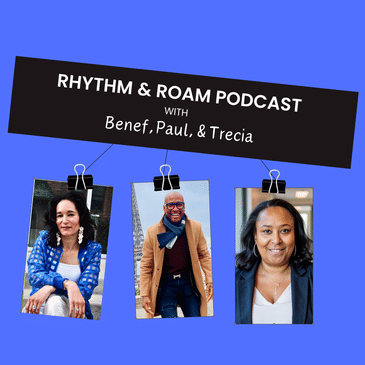



Benef, Paul, and Trecia dive into the heart of Africa through the experiences of Apostle Willie. Born and raised in Africa, he breaks down common myths about the continent, giving a fresh perspective on daily life, culture, and the challenges faced by many Africans. This episode is more than just an interview; it’s a journey into the heart, beauty, and complexities of African communities told firsthand by someone who has lived it. This conversation will open your eyes to the richness of Africa’s cultures and the strength of its people
[00:00:00] [SPEAKER_00]: Africa has always been a moda, that receives all. Africa is like, I think if Africa was not part of the continent of the world, the world would be missing a lot.
[00:00:21] [SPEAKER_00]: Because in Africa we don't talk about race, we don't talk about color. We have a very deep control for hospitality.
[00:00:36] [SPEAKER_02]: Hey everyone, welcome to rhythm and Rome with Benef, Paul and Trecia. So welcome to our four part series on Africa Whaaat?
[00:00:43] [SPEAKER_02]: Yes.
[00:00:44] [SPEAKER_02]: Today we spoke to Papasa Willi and he is enlightening us on what it is to be or live in Africa. And how are we changing that narrative?
[00:00:56] [SPEAKER_00]: It's very difficult to see people who are deeply in such for the good of humanity to a point that it will move them to TS.
[00:01:06] [SPEAKER_01]: The three of us have never been to Africa and we've realized that we don't know anything.
[00:01:12] [SPEAKER_01]: Like the things that we've seen on the news media, you know, I just don't feel like it's an accurate representation of what Africa really is all about.
[00:01:21] [SPEAKER_01]: Like what you just said with the hospitality and the philosophy on life. And so that's why we're doing this series about Africa so we can share that this knowledge with the rest of our listeners to.
[00:01:38] [SPEAKER_01]: I mean, I think if you don't go there, I just feel like if you don't really know, you don't really have a concept unless you physically go to Africa.
[00:01:48] [SPEAKER_01]: At least that's what we've been hearing from the other people that we've interviewed to see yeah incredible.
[00:01:57] [SPEAKER_00]: I grew up in two African countries.
[00:02:01] [SPEAKER_00]: One of them was Nigeria. The other of them was Cameroon.
[00:02:07] [SPEAKER_00]: And I think where I got my most of my ex-rodocais did the longer was Nigeria.
[00:02:14] [SPEAKER_00]: That is my maternal home.
[00:02:19] [SPEAKER_00]: And growing up was very interesting for me because I grew up in a family that loved God.
[00:02:29] [SPEAKER_00]: I grew up in a family that had strict adherence to morality.
[00:02:36] [SPEAKER_00]: I remember the little bit no because Christianity was brought into Nigeria into Africa generally.
[00:02:44] [SPEAKER_00]: But before Christianity came away talking to God, so I grew up in a community that believes that every child belongs to you.
[00:02:55] [SPEAKER_00]: Not just your parents alone.
[00:02:59] [SPEAKER_00]: And so it is a responsibility of every adult to make sure that they take care of you because if you grow up to cost trouble to the communities, good to affect everyone.
[00:03:11] [SPEAKER_00]: I was so grew up in a community where when people wake up in the morning, they knock at the door, they are neighbors to find out if they are still alive, if they slept well.
[00:03:19] [SPEAKER_00]: I grew up in a community where if you see gone anyways for those who are being licensed to onto with the ground.
[00:03:27] [SPEAKER_00]: I grew up in an environment where if you come home and tell your parents that are not adults, that hits you because of something but you do your parents will beat you because they believe their adult is right.
[00:03:41] [SPEAKER_05]: I'm laughing at that because I can relate a little bit with my own parents.
[00:03:48] [SPEAKER_00]: Yes, thank you very much.
[00:03:50] [SPEAKER_00]: By grew up in a community where we respect our traditional rule as more than elected political officers.
[00:03:57] [SPEAKER_03]: Right.
[00:03:58] [SPEAKER_00]: Because our traditional rule as I go to be sitting on the throne for life, political offices for five years and they get out.
[00:04:06] [SPEAKER_00]: So when we go to greet them, they call them the old bars.
[00:04:10] [SPEAKER_00]: When we go to the palace to discuss the rhythm with them, the first thing we do is that we prostrate on the ground for them.
[00:04:18] [SPEAKER_00]: And then secondly, they have to ask you to sit down before you can sit and then totally we present them with a gift.
[00:04:26] [SPEAKER_00]: And another thing I want to say is that I grew up in a culture that believes so much in it in natural meals.
[00:04:33] [SPEAKER_00]: And that is why longevity is not an issue with them.
[00:04:39] [SPEAKER_00]: Our grandparents see them at 70 years of age as they go into the farm and walk in farm lands around believable.
[00:04:47] [SPEAKER_00]: When they seek, they don't go to the farm houses because they believe that everything that has been processed in their farm houses is harmful to their system.
[00:04:55] [SPEAKER_00]: My grandmother and I say, she takes, she goes into the backyard and gets some leaves and gets some back of trees.
[00:05:05] [SPEAKER_00]: And then hit that up in the fire very well.
[00:05:08] [SPEAKER_00]: And then it turns to some kind of color reddish color or something when you take one of video I find.
[00:05:14] [SPEAKER_00]: Africa seems to be so close to divinity than the world can ever know.
[00:05:20] [SPEAKER_00]: And it is sad that the media has used Africa for many, many ages.
[00:05:29] [SPEAKER_00]: For the unhealthy propaganda.
[00:05:33] [SPEAKER_05]: Of course.
[00:05:34] [SPEAKER_00]: Yeah, because if not for Africa, the Western world would not be what it is today.
[00:05:42] [SPEAKER_05]: That is an absolute great point you made because I don't think people see it in that sense, you know.
[00:05:50] [SPEAKER_00]: And it's because it is not projected through the media.
[00:05:54] [SPEAKER_00]: Yeah, that's the normality of the society.
[00:05:57] [SPEAKER_02]: What was the decision to move to the United States?
[00:06:00] [SPEAKER_02]: And now that you have, you know, all this, you know, the love and the community.
[00:06:08] [SPEAKER_02]: The vote to the United States, what was your impression?
[00:06:12] [SPEAKER_00]: As an African tell growing up.
[00:06:17] [SPEAKER_00]: The way the media protected the Western world.
[00:06:23] [SPEAKER_00]: They make it in such a way that you will want to visit it.
[00:06:29] [SPEAKER_00]: I know just that my wife had lived, my wife was born in Africa and so the dad took out of Africa.
[00:06:37] [SPEAKER_00]: For many years and she was in the United States.
[00:06:42] [SPEAKER_00]: And then when it became real that this is the woman that I was going to be spending the rest of my life with.
[00:06:52] [SPEAKER_00]: And she's in the United States.
[00:06:54] [SPEAKER_00]: She had to come down to Africa.
[00:06:57] [SPEAKER_00]: We did the marriage and then she returned back.
[00:07:02] [SPEAKER_00]: For her, she didn't want to stay in Africa because she has been so used to the United States, the Western world.
[00:07:08] [SPEAKER_00]: And so one of my decision of coming was not to run away from Africa.
[00:07:14] [SPEAKER_00]: But was to respect the decision of the woman I love.
[00:07:19] [SPEAKER_00]: To say, okay, we can't make a family in the United States together.
[00:07:25] [SPEAKER_00]: But I'm not entirely living Africa because home is home.
[00:07:33] [SPEAKER_00]: So with all the media publicity of the Western world and how beautiful it was.
[00:07:39] [SPEAKER_00]: And everything that I was okay, let me go see the new, how it is.
[00:07:44] [SPEAKER_00]: And then when I get my soids and I even opt to announce the experience in a lot of cultural shock.
[00:07:53] [SPEAKER_00]: But I had to be here because number one, my family, my kids are easier and my wife is here.
[00:07:59] [SPEAKER_00]: And so, but I still have my ministry in Africa with our head office in Abuja.
[00:08:05] [SPEAKER_00]: And I see called the net missions across the world.
[00:08:08] [SPEAKER_00]: We have more than 500 missionaries and our net work from different African countries.
[00:08:13] [SPEAKER_01]: So that's amazing for love.
[00:08:16] [SPEAKER_01]: I love that.
[00:08:17] [SPEAKER_02]: The old traditional story of you came from.
[00:08:24] [SPEAKER_02]: How long had your life been in the United States?
[00:08:29] [SPEAKER_02]: At the time, or how long had she lived in the United States prior to you moving 20 years.
[00:08:37] [SPEAKER_02]: Wow, okay.
[00:08:38] [SPEAKER_01]: You mentioned culture shock and can you talk a little bit more about what things like shock to you are just so different that it was crazy when you got to the United States?
[00:08:51] [SPEAKER_00]: Now, number one, the siblings of a lot of people in the United States is Netflix, Hulu.
[00:09:07] [SPEAKER_00]: Let's go see.
[00:09:09] [SPEAKER_00]: This is born, Netflix, Hulu, Mama's on prime.
[00:09:15] [SPEAKER_03]: And you know.
[00:09:18] [SPEAKER_00]: So, so, in one interest into my butter, I've realized that.
[00:09:24] [SPEAKER_00]: If you ever join me to Africa for the first time, you're going to see people come to the airport to welcome you when they see that your face is pretty new in the continent.
[00:09:36] [SPEAKER_00]: And there'll be asking, can we help you with your baths?
[00:09:40] [SPEAKER_00]: What do you want us to do for you?
[00:09:44] [SPEAKER_00]: And then when you live in Africa, you can be working on the road and somebody will work up to you and said, I like to know you and where you are living.
[00:09:56] [SPEAKER_00]: How are you?
[00:10:00] [SPEAKER_00]: Like I said, when you get one, we get over the morning, you knock at someone's door to be sure that they are okay.
[00:10:07] [SPEAKER_00]: But when I was in Seattle, I lived in an apartment for two years and I don't know how my neighborhood looks like.
[00:10:16] [SPEAKER_00]: And I'm kind of asking myself a question I said, I didn't live in all the existing.
[00:10:24] [SPEAKER_00]: And secondly, this is a cultural shock.
[00:10:29] [SPEAKER_00]: Secondly, you couldn't just walk to somebody's door and knock at it.
[00:10:35] [SPEAKER_00]: The next thing you're expecting to see is a gone pointer at your foreheads.
[00:10:40] [SPEAKER_00]: Because they are going to call it trespass.
[00:10:43] [SPEAKER_00]: In the United States, when you are broke, you are broke.
[00:10:49] [SPEAKER_00]: It's not like you are going to call anybody.
[00:10:51] [SPEAKER_00]: So don't get a habit, brother, I live in here.
[00:10:54] [SPEAKER_00]: You can be a homeless and displaced in less than 24 hours.
[00:11:00] [SPEAKER_00]: And it is not, I don't think we don't live like that.
[00:11:06] [SPEAKER_00]: One that it told me is that I'm living like a very good room my life is over.
[00:11:12] [SPEAKER_00]: Because I cannot afford to live in insurance.
[00:11:18] [SPEAKER_00]: I'm struggling to afford my mortgage and my mortgage and my rent and all of this.
[00:11:25] [SPEAKER_00]: But I never look at it in a restaurant.
[00:11:27] [SPEAKER_00]: And not a cultural shock was.
[00:11:30] [SPEAKER_00]: I stop people with cancer stage for.
[00:11:35] [SPEAKER_00]: Yes.
[00:11:35] [SPEAKER_00]: They don't look worried.
[00:11:39] [SPEAKER_00]: It's like they are happy about it even preparing for that.
[00:11:45] [SPEAKER_00]: And I thought of looking at it, I tried to stop the deeply and said,
[00:11:48] [SPEAKER_00]: In Africa, that is a big deal to us.
[00:11:53] [SPEAKER_00]: The reason is number one, Africa is not diseased friendly.
[00:12:01] [SPEAKER_00]: There are many things that we can handle traditionally.
[00:12:05] [SPEAKER_00]: And so with every almost every week, there is somewhere to go and enjoy humanity.
[00:12:12] [SPEAKER_00]: But I thought of starting very deeply in the United States.
[00:12:15] [SPEAKER_00]: People here see dead as an escape from IOS.
[00:12:21] [SPEAKER_05]: Yes.
[00:12:23] [SPEAKER_00]: Disgusting.
[00:12:24] [SPEAKER_00]: As an escape from death they are going to be spending the rest of their life pain.
[00:12:30] [SPEAKER_00]: Well, this is my personal opinion.
[00:12:33] [SPEAKER_00]: I have a friend in Washington State.
[00:12:35] [SPEAKER_00]: It took him 30 years to finish paying for his mortgage.
[00:12:38] [SPEAKER_00]: But every January has to remit $10,000 to Washington State government.
[00:12:44] [SPEAKER_00]: And as the water's immunodecite property tax and that's as good as before life.
[00:12:48] [SPEAKER_02]: Yeah.
[00:12:50] [SPEAKER_05]: This is unfortunate.
[00:12:52] [SPEAKER_05]: You know, that's unfortunate on the Western side of the African relate to a lot of the things that you're saying.
[00:12:59] [SPEAKER_05]: But I wanted to, I'll be remiss if I didn't ask a follow up to the cultural differences on when you when you're in an African and you came to America to live.
[00:13:13] [SPEAKER_05]: What was it like you said you didn't know your neighbor and obviously we all can relate to that because people were whatever.
[00:13:20] [SPEAKER_05]: But what it was like as far as experiencing racism or was there anything to do with it along that?
[00:13:29] [SPEAKER_05]: I mean, just when you first got here and was there any difference?
[00:13:33] [SPEAKER_05]: Because you just said that race was not an issue in Africa.
[00:13:37] [SPEAKER_05]: And then you came here.
[00:13:40] [SPEAKER_05]: Was what was that like?
[00:13:42] [SPEAKER_00]: No, well, I'm not one of the cultural shows was that I began to study people and kind of technically ask with them because they show a race.
[00:13:50] [SPEAKER_00]: I was like, I've been a race in my experience it systematically.
[00:13:54] [SPEAKER_00]: But again, I had to call a few friends and say all of what's the I immigrants. So why are you racist?
[00:14:01] [SPEAKER_03]: Good point.
[00:14:02] [SPEAKER_03]: Very important.
[00:14:05] [SPEAKER_00]: You are from Armenia and you have been racist with me that I'm from Africa.
[00:14:11] [SPEAKER_00]: And you're not even born into United States.
[00:14:15] [SPEAKER_00]: Yeah, how did you arrive at that?
[00:14:18] [SPEAKER_00]: Number one, I saw that depression is a personal companion in the Western world.
[00:14:29] [SPEAKER_00]: Because at some point you feel so lonely.
[00:14:32] [SPEAKER_05]: Absolutely.
[00:14:32] [SPEAKER_00]: Because another cultural show was you're walking to the place where you are walking.
[00:14:37] [SPEAKER_00]: And nobody cares to ask you good morning, how was your night?
[00:14:40] [SPEAKER_00]: Yeah.
[00:14:42] [SPEAKER_00]: We don't leave like that in Africa.
[00:14:46] [SPEAKER_00]: Even with your manager, you cannot even say good morning.
[00:14:51] [SPEAKER_00]: And so I tried to said no, well, you might be in space because we come to this place.
[00:14:56] [SPEAKER_00]: And then I tried to try to introduce that I said in Africa when you get up in the morning.
[00:15:01] [SPEAKER_00]: They kind of send you to any human being you see to greet them.
[00:15:06] [SPEAKER_02]: Very true.
[00:15:07] [SPEAKER_00]: But in the in the US, nobody does that to you.
[00:15:12] [SPEAKER_00]: Stuck on Lee.
[00:15:14] [SPEAKER_00]: People, there are three things that different people's life in the US are seen largely.
[00:15:19] [SPEAKER_00]: You sleep.
[00:15:21] [SPEAKER_00]: You work up, you go to work.
[00:15:23] [SPEAKER_00]: You return back, you eat and then you stay on Netflix until you sleep again.
[00:15:29] [SPEAKER_00]: So, more me.
[00:15:32] [SPEAKER_00]: And I'm walking on a book right now and I buried in the valley of the dollar.
[00:15:37] [SPEAKER_05]: Wow.
[00:15:39] [SPEAKER_05]: Mary Carmel title.
[00:15:40] [SPEAKER_05]: To capitalists society.
[00:15:42] [SPEAKER_05]: To capitalists society.
[00:15:44] [SPEAKER_00]: A lot of people I saw enticed by money, which is in mirage.
[00:15:51] [SPEAKER_00]: That they forget to experience what the living saw about in the Western world.
[00:15:55] [SPEAKER_05]: Oh, amen.
[00:15:56] [SPEAKER_05]: That's what I, I can relate to.
[00:15:59] [SPEAKER_00]: I was talking to a lady she told me that.
[00:16:02] [SPEAKER_00]: Really, I walk here for eight hours and when I get to them,
[00:16:07] [SPEAKER_00]: I still have to do Anuba from 7 PM till 11 PM.
[00:16:15] [SPEAKER_00]: And that cannot still make me live the life of Anoli.
[00:16:22] [SPEAKER_00]: And sometimes I feel like those going to the,
[00:16:26] [SPEAKER_00]: to the, to the sea shore where nobody's going to be asking me for your monthly mortgage.
[00:16:36] [SPEAKER_00]: Your car payment, your car insurance, your life insurance.
[00:16:45] [SPEAKER_00]: You see in Africa we don't get up in the morning and see our government begin to put body on us.
[00:16:55] [SPEAKER_00]: I have landed properties in Africa.
[00:16:59] [SPEAKER_00]: I acquired the property, I maintain it.
[00:17:02] [SPEAKER_00]: Nobody comes to disturb me for one tax or the other.
[00:17:07] [SPEAKER_00]: If I need water, I can't dig a borehole in my property.
[00:17:11] [SPEAKER_00]: Pay the necessary fee.
[00:17:12] [SPEAKER_00]: I need to pay the government and dig it is mine for life.
[00:17:17] [SPEAKER_00]: I can, I can't decide not to work for two weeks and I'm still okay because my farm is very, very far time.
[00:17:25] [SPEAKER_00]: But here in the states, when you come in, if you're not always enough, people will take a vehicle that is having issues.
[00:17:34] [SPEAKER_00]: And they can't outsmart you with credit cards and all of those.
[00:17:39] [SPEAKER_00]: So there's so many, there's a lot of things going on in the Western world that is enough to make you live in depressed.
[00:17:48] [SPEAKER_00]: If I another approach or I show because when I came to the United States,
[00:17:51] [SPEAKER_00]: I discovered people were taking drugs over and right.
[00:17:54] [SPEAKER_00]: I've never had it in my life.
[00:17:58] [SPEAKER_05]: You're specifically talking about prescription drugs.
[00:18:01] [SPEAKER_00]: Yes, yes.
[00:18:02] [SPEAKER_00]: There's a lady said I'm almost taken because I was talking to a young man.
[00:18:06] [SPEAKER_00]: You're not just said, when is on time I sit down in my room with all the ACs I'm still sweating.
[00:18:14] [SPEAKER_00]: Because I'm thinking what if I lose my job? What do I do?
[00:18:19] [SPEAKER_03]: And yeah.
[00:18:21] [SPEAKER_00]: So it's like living on the tip of the edge.
[00:18:25] [SPEAKER_00]: And so when you go to the hospital and doctor said, oh, there is a terminal illness.
[00:18:29] [SPEAKER_00]: You said, okay, that's fine.
[00:18:31] [SPEAKER_00]: Because this better to escape from these realities than to remain in this uncertainty.
[00:18:38] [SPEAKER_05]: Well, what have you seen changed in Africa?
[00:18:42] [SPEAKER_05]: You know, since, you know, you move to the United States like up to now.
[00:18:47] [SPEAKER_00]: Okay.
[00:18:50] [SPEAKER_00]: I was discussing with an American to which the go and she told me that Willie, for me particularly the American dream is to live America.
[00:19:02] [SPEAKER_05]: Make the money and leave.
[00:19:04] [SPEAKER_05]: Yeah.
[00:19:05] [SPEAKER_01]: We've actually, we've all been talking about moving somewhere else.
[00:19:09] [SPEAKER_05]: Yeah, no really. This is the truth. A lot of and especially a lot of people of color have been moving out of America and draws and these are not older people of people of people.
[00:19:21] [SPEAKER_05]: Yeah, we're talking about people during their 40s, you know, just saying the heck with it. I'm out, you know, kind of thing.
[00:19:28] [SPEAKER_05]: And it's interesting that she mentioned that.
[00:19:32] [SPEAKER_05]: Make it.
[00:19:33] [SPEAKER_00]: Yeah, just make the money and go because if you want to stay somebody we find a way of collecting it from you.
[00:19:41] [SPEAKER_05]: I can relate to that to a possibility.
[00:19:44] [SPEAKER_05]: I live in Paris and I'm still paying taxes in the United States.
[00:19:50] [SPEAKER_05]: Like tell me how does that work plus some paying taxes here in France.
[00:19:56] [SPEAKER_00]: What has changed in Africa is?
[00:20:00] [SPEAKER_04]: The future of the world of the, in fact, the Africa is the next future of this world.
[00:20:16] [SPEAKER_00]: And all things that have changed is our leaders are beginning to rise up to say it is not right or you to come to this place and invest.
[00:20:31] [SPEAKER_00]: And you are making use of mineral resources and just giving us a few percentage of it.
[00:20:42] [SPEAKER_00]: I know a lot of Americans, why invest in heavily in Africa.
[00:20:48] [SPEAKER_00]: And they told me that they just want to return to that place and be able to sleep for two weeks without thinking of where the next bill will come.
[00:21:01] [SPEAKER_00]: So what has changed in Africa is there's a lot of enlightenment.
[00:21:05] [SPEAKER_00]: In fact, the kind of development that's good or enough for Africa is unfortunate because what the Western world is doing is that the Western world is playing a politics that is not fair and this what they do they go to a place like serial Leon.
[00:21:21] [SPEAKER_00]: And they pretend the people are suffering.
[00:21:24] [SPEAKER_00]: They begin to sell in reality.
[00:21:29] [SPEAKER_00]: That is not correct.
[00:21:32] [SPEAKER_00]: I went to Liberia and with all the goals that were sticking out of Liberia, it's so sad to see that Liberia doesn't even have a major working route in road network.
[00:21:45] [SPEAKER_00]: So the Western world what they wish them would have been doing for ages is the keep taking their taking and they're still taking as I talk to you now.
[00:21:56] [SPEAKER_00]: So what has changed in Africa that there's a lot of a whole lot of enlightenment going on.
[00:22:02] [SPEAKER_00]: Like those those the incident are happening with this country, Niger Republic.
[00:22:08] [SPEAKER_00]: Niger Republic is we are sharing border with them not Syria.
[00:22:13] [SPEAKER_00]: So when there was crisis, the Western world leaders rose up on two of our residents to act and make sure that they return them back to democracy because the military became angry.
[00:22:25] [SPEAKER_00]: Now come parties who wanted to do because of their hard mineral resources that you from Niger.
[00:22:33] [SPEAKER_05]: It's taken advantage of.
[00:22:37] [SPEAKER_00]: So they wanted to take so they wanted to tell Nigeria to intervene, militarily with military power to make sure that the rest don't need to democracy.
[00:22:48] [SPEAKER_00]: But how I lead us were wise as they look.
[00:22:51] [SPEAKER_00]: The Western world is 2000 miles from us and we are telling them about that with this nation.
[00:23:00] [SPEAKER_00]: If we rise up against them they'll be war in our territory.
[00:23:04] [SPEAKER_00]: And it's one of the Western world so why do we go to the world in the West place?
[00:23:09] [SPEAKER_00]: One of the leaders in Africa, the President of Rwanda has come up to say it is on February, country as Russia to someone all 54 African president.
[00:23:21] [SPEAKER_00]: Africa is a continent, Russia is a country.
[00:23:26] [SPEAKER_00]: So why should a country has the audacity to someone a continent with all his head of states?
[00:23:33] [SPEAKER_00]: To come to its country to discuss the policy that we move Africa was on, the leaders want to know this has to stop.
[00:23:40] [SPEAKER_00]: Yes.
[00:23:41] [SPEAKER_00]: If they are calling for us next time we send a representative to go there and listen to whatever they are saying.
[00:23:46] [SPEAKER_05]: Bingo.
[00:24:16] [SPEAKER_00]: They are making plans of bringing back about 3500 doctors from UK.
[00:24:24] [SPEAKER_00]: Because what has been going on is,
[00:24:29] [SPEAKER_00]: Colonialism came to give us a mindset that without us you can't succeed but they are totally succeed because of us.
[00:24:37] [SPEAKER_00]: So Africans have wanted to say country, they are state in my country, not Syria, they call it on do-stit.
[00:24:43] [SPEAKER_00]: I'm telling you facts on those states, you can't come six hours by unit without any professor.
[00:24:52] [SPEAKER_02]: I'm so excited to take this adventure and I just, you know, I really really hope that we get to come to Africa and visit because you've made a such a wonderful picture and it was such a great narrative, a new narrative, a new lens to the Africa through and I just want to thank you for that.
[00:25:10] [SPEAKER_02]: So, you know, if we're traveling to Africa and we're, you know, we're taking this visit. Where would you recommend, you know, one of the first places that we should go? What should we see? What would you say is definitely something that we should, you know, sick of pen and say you need to go there.
[00:25:32] [SPEAKER_00]: Now, when I go to Africa like I'm going to a Bucchanal, when I get to a Bucchan, the first place I'm going to visit I'm going to go to, I so rock.
[00:25:44] [SPEAKER_00]: I so rock is the seat of the presidency.
[00:25:49] [SPEAKER_00]: If you are, if you are interested, well, I want to meet with the president, you could send in a letter ahead of time that you want to see the president of Nigeria and then,
[00:26:02] [SPEAKER_00]: you know how to go to the right protocols when you arrive, they'll give you a talk of the presidential, we'll learn Africa in Nigeria. I'm talking about Nigeria and I'm talking about Nigeria and then if you ever go to Nigeria, there is a place to most visit the places Lagos.
[00:26:19] [SPEAKER_00]: Yeah, I yeah. Legos. There's this place that visiting Lagos, the college, um, the fine Victoria Island, BCS. Okay.
[00:26:31] [SPEAKER_00]: It has a lot of results there where you can just go and relax and meet your mom, being as well willing to relate with you, who are willing to talk with you, who be excited to meet you.
[00:26:43] [SPEAKER_00]: But at the time you make up your mind to visit the presidential villa in Abujan, you can go through that website and attend the necessary protocol.
[00:26:52] [SPEAKER_00]: Then you can go there and people will take you around and show you the seat of the president's, when we call it our own White House in Nigeria.
[00:26:58] [SPEAKER_00]: Okay. Then there's a place that I recommend that you visit to is the National Museum and Obas Palace in Bimin City.
[00:27:09] [SPEAKER_00]: Okay.
[00:27:12] [SPEAKER_00]: Bimin City is an East End City, but recently the Queen of England had to return back this cop shot that was taken from Bimin, which became part of a crown.
[00:27:23] [SPEAKER_00]: Okay. You know how to come to Cano, which is in the northern part of Nigeria, when we have the Eastern Palace of the Emia, you are going to see the an ancient building that is more than 300 years old.
[00:27:44] [SPEAKER_00]: Still standing.
[00:27:47] [SPEAKER_02]: We want to thank you so much for your time. This has been amazing.
[00:27:52] [SPEAKER_02]: We don't want to take up all of it, but we have so much great information.
[00:27:58] [SPEAKER_01]: Thank you.
[00:27:59] [SPEAKER_01]: Thank you so much for tuning in today for this very special episode with Apostle Willy.
[00:28:05] [SPEAKER_01]: That was amazing. I mean, it's just like his energy, just the ability to truly feel like I understood a little bit better what Africa is all about and now I'm ready to go.
[00:28:18] [SPEAKER_01]: I don't know about it.
[00:28:19] [SPEAKER_01]: I'm ready to go.
[00:28:22] [SPEAKER_05]: Let's get that ticket.
[00:28:24] [SPEAKER_01]: Definitely. If you like our show, please share with your friends. Please comment and subscribe.
[00:28:32] [SPEAKER_01]: We are growing our little show and we want to bring you more amazing experiences from people that are all around the world.
[00:28:42] [SPEAKER_01]: Thank you again. Take care.
[00:28:45] [SPEAKER_05]: Go!